How People-Pleasing Kills Sexual Connection
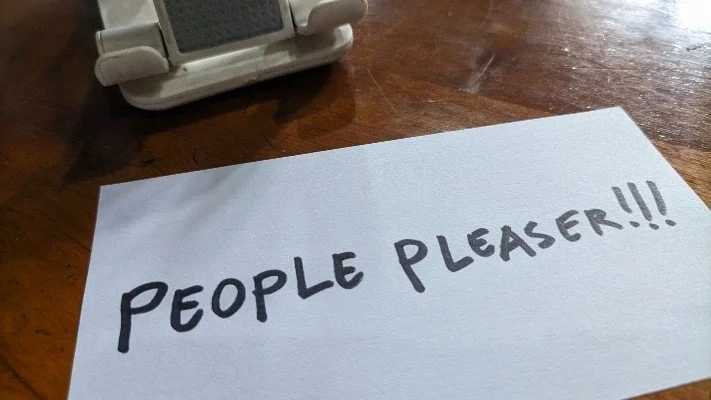
People-pleasing can look like love.
You anticipate what your partner needs.
You try not to disappoint them.
You avoid unnecessary conflict.
You accommodate.
You compromise.
You say yes.
And somewhere along the way, you may stop asking yourself a very important question:
What do I actually want?
This becomes particularly important when we talk about sex.
Because sexual connection requires more than being willing to make your partner happy.
It requires access to your own desire, preferences, boundaries, pleasure, and authentic self.
And chronic people-pleasing can slowly disconnect you from all of them.
People-Pleasing Isn't Just Being Nice
People-pleasing is often misunderstood as simply being thoughtful or generous.
But healthy generosity involves choice.
People-pleasing is often driven by something deeper:
“I need you to be okay so that I can feel okay.”
That can look like:
Don't disappoint them.
Don't make them angry.
Don't be difficult.
Don't ask for too much.
Don't hurt their feelings.
Don't say what you really think if it might create conflict.
For many people, these patterns developed for a reason.
Perhaps keeping other people happy helped maintain connection.
Maybe conflict felt unsafe.
Maybe love was conditional.
Maybe being agreeable earned approval.
Maybe you learned that other people's emotions were somehow your responsibility.
Over time, accommodating others can become automatic.
And then you bring that pattern into your intimate relationships.
What Happens When People-Pleasing Enters the Bedroom?
People-pleasing can profoundly affect sexual connection because healthy sexuality requires the ability to notice and communicate what is happening inside you.
Do I want this?
Does this feel good?
Do I want something different?
Am I turned on?
Do I want to stop?
Would I rather be touched somewhere else?
What am I curious about?
What do I fantasize about?
What don't I enjoy?
A chronic people-pleaser may be much more focused on an entirely different set of questions:
Are they enjoying this?
Do they think I'm attractive?
Am I doing this right?
Will they be disappointed if I say no?
Are they going to think I'm boring?
Am I taking too long?
Should I just go along with this?
Notice what happened.
Sex stopped being an experience occurring inside your body.
It became a performance you were monitoring from the outside.
People-Pleasing Can Turn Sex Into Performance
Sexual connection becomes difficult when you're constantly evaluating yourself.
Instead of experiencing pleasure, you're assessing your performance.
Instead of noticing your body, you're watching your partner's reactions.
Instead of asking:
“Does this feel good to me?”
you may be wondering:
“Am I making them happy?”
That can create significant disconnection from your own arousal.
You may become so focused on being a “good partner” that you have difficulty actually being present.
And ironically, the harder you work to create a good sexual experience for someone else, the less connected you may feel to the experience yourself.
You Can Say Yes Without Actually Wanting To
This is one of the places where people-pleasing becomes particularly important in sex therapy.
You can technically consent to sex while still overriding yourself.
Maybe your partner initiates and you aren't interested.
But you think:
It's been a while.
They've had a stressful week.
They'll feel rejected.
I don't want them to think I don't love them.
They've been really patient.
It's easier to just do it.
So you say yes.
Occasionally choosing sexual connection when you're not initially experiencing spontaneous desire isn't necessarily problematic. Many people experience responsive desire, where arousal develops after pleasurable connection begins.
But there is an important difference between:
“I'm not turned on yet, but I'm genuinely open to seeing where this goes.”
and:
“I don't want this, but I don't feel comfortable disappointing you.”
The first contains choice.
The second contains self-abandonment.
Repeatedly Overriding Yourself Can Change Your Relationship With Sex
When you repeatedly participate in sex you don't actually want, your body may begin learning something:
Sex means ignoring myself.
Sex becomes associated with obligation.
Pressure.
Performance.
Managing someone else's feelings.
Eventually, desire may decrease.
You may start avoiding situations that could lead to sex.
You may stop cuddling because you're worried cuddling will create expectations.
You may pull away from kissing.
You may stay up later than your partner.
You may suddenly become very busy.
And then you may wonder:
Why don't I want sex anymore?
Sometimes low desire isn't simply a lack of libido.
Sometimes it is a protective response to a sexual dynamic in which you don't feel fully free to be yourself.
Resentment Often Shows Up Where Boundaries Didn't
People-pleasers often struggle with resentment.
Not necessarily because their partner is intentionally taking advantage of them.
Sometimes the partner doesn't even realize how much accommodation is happening.
The people-pleaser says:
“It's fine.”
But it isn't fine.
They say:
“Whatever you want.”
But they actually have a preference.
They agree to sex.
But internally they don't want it.
They don't communicate what they need.
And then resentment builds.
This creates an important relational paradox:
You can spend so much energy trying not to disappoint your partner that you eventually become disconnected from them.
Avoiding small moments of discomfort can create much larger relationship problems later.
Your Partner Can't Know You If You're Always Managing Them
Intimacy requires being known.
Not simply being liked.
Those are very different things.
If you're constantly adjusting yourself based on what you think your partner wants, your partner may be interacting with the version of you that feels safest to present.
They don't necessarily know:
what turns you on.
what turns you off.
what makes you uncomfortable.
what you want more of.
what you want less of.
what you're curious about.
what you're afraid to ask for.
what you actually think.
This is why people-pleasing can create a strange kind of loneliness.
You may be deeply involved with someone while simultaneously feeling that they don't truly know you.
But allowing yourself to be known requires risking something people-pleasers often find terrifying:
Your partner might not always like what you say.
Sexual Intimacy Requires Differentiation
Healthy intimacy isn't created by two people becoming identical.
It requires two separate people who can remain connected while still having different experiences.
You can want sex when your partner doesn't.
Your partner can enjoy something sexually that you don't enjoy.
You can have a fantasy your partner doesn't share.
You can say no without rejecting the entire relationship.
You can ask for something without demanding that your partner provide it.
You can hear your partner's disappointment without immediately changing your boundary to make the discomfort disappear.
This ability to remain connected while maintaining your own internal experience is an important part of differentiation.
And it can be particularly challenging for people who learned that maintaining relationships meant accommodating other people.
The Nervous System May Be Trying to Keep You Safe
People-pleasing isn't always a conscious decision.
For some people, appeasing others has become an automatic nervous system response.
You may notice conflict and immediately want to smooth things over.
Your partner looks disappointed and your body reacts before you've even consciously decided what you want.
You say:
“Okay, fine.”
The immediate tension disappears.
Your nervous system experiences relief.
This can reinforce the pattern.
From a nervous system perspective, people-pleasing may function as a strategy for maintaining relational safety:
If you're happy with me, I'm safe.
That strategy may have helped you navigate relationships earlier in life.
But adult intimacy requires something different.
It requires learning:
I can tolerate someone else's disappointment without abandoning myself.
Why Boundaries Can Actually Improve Sexual Connection
People sometimes worry that stronger boundaries will create less intimacy.
Often, the opposite happens.
Imagine knowing that when your partner says yes, they actually mean yes.
Imagine knowing they can tell you when something doesn't feel good.
Imagine being able to ask:
“What do you want?”
and trusting that they'll give you an authentic answer.
Boundaries make this possible.
A boundary doesn't necessarily say:
“I don't want you.”
It might say:
“I want to be able to show up authentically with you.”
When both partners have room to express preferences, limits, desires, and uncertainty, sexual connection becomes more collaborative.
What Does More Authentic Sex Look Like?
Moving away from people-pleasing doesn't mean becoming selfish or disregarding your partner's experience.
Healthy sexuality includes generosity.
Sometimes you do things because your partner enjoys them.
Sometimes they do things because you enjoy them.
But generosity feels different when it comes from choice rather than fear.
Authentic sexual connection may sound like:
“I don't want intercourse tonight, but I'd love to cuddle.”
“Can you slow down?”
“I actually don't enjoy that very much.”
“I'd like more of this.”
“I'm interested, but I need some time to transition.”
“I'm nervous to tell you this, but there's something I'd like to try.”
“I'm not sure what I want yet.”
Those statements may feel incredibly vulnerable if you're accustomed to prioritizing everyone else's experience.
But vulnerability is part of intimacy.
The Goal Isn't to Stop Caring About Your Partner
The opposite of people-pleasing isn't becoming inconsiderate.
It's becoming more authentic.
You can care that your partner is disappointed without believing you must eliminate their disappointment.
You can care about their sexual needs without making yourself responsible for satisfying every one of them.
You can be generous without abandoning yourself.
You can compromise without disappearing.
And you can love someone without constantly managing their emotional state.
If You Don't Know What You Want Anymore
Sometimes people who have spent years accommodating others genuinely don't know what they want.
Ask them:
“What do you like sexually?”
and the answer may be:
“I don't know.”
That doesn't necessarily mean there is something missing.
It may mean there hasn't been much room to explore the question.
Part of rebuilding sexual connection may involve becoming curious about yourself again.
What feels pleasurable?
What creates desire?
What makes your body tense?
What helps you relax?
What kinds of touch do you enjoy?
What makes you feel desired?
What makes you feel pressured?
What fantasies or interests have you dismissed because you were worried about how someone else would respond?
Before sexual intimacy becomes more connected between partners, sometimes one partner first needs to become more connected to themselves.
Being Known Is Riskier Than Being Pleasing
People-pleasing offers a tempting promise:
If I become what you need, you won't leave me.
But the cost can be enormous.
Because eventually you may receive love, affection, approval, and even sexual attention while quietly wondering:
Would you still want me if I stopped being so easy to please?
Real intimacy requires discovering the answer.
Sexual connection isn't simply two bodies interacting.
It is two people allowing themselves to be present, honest, responsive, vulnerable, and known.
And sometimes improving your sex life doesn't begin with learning a new sexual technique.
It begins with learning to say:
This is what I want.
This is what I don't want.
This is what feels good.
This is who I actually am.
Sex Therapy for People-Pleasing, Desire, and Intimacy
If people-pleasing, difficulty setting boundaries, mismatched desire, sexual anxiety, or relationship patterns are affecting your sexual connection, sex therapy can help you explore what's happening underneath the surface.
My approach can include exploring sexual desire, emotional and physical intimacy, attachment patterns, boundaries, nervous system responses, relationship dynamics, shame, sexual communication, and the parts of you that may have learned that keeping other people happy is necessary for maintaining connection.
Sex therapy isn't about teaching you to care less about your partner.
It's about helping you create enough safety and self-awareness to participate in intimacy without losing yourself in the process.
I offer a free 15-minute consultation to discuss what you're experiencing, what you'd like to change, and whether working together may be a good fit.